Why Slow Ascents and Buoyancy Control Matter
Safety
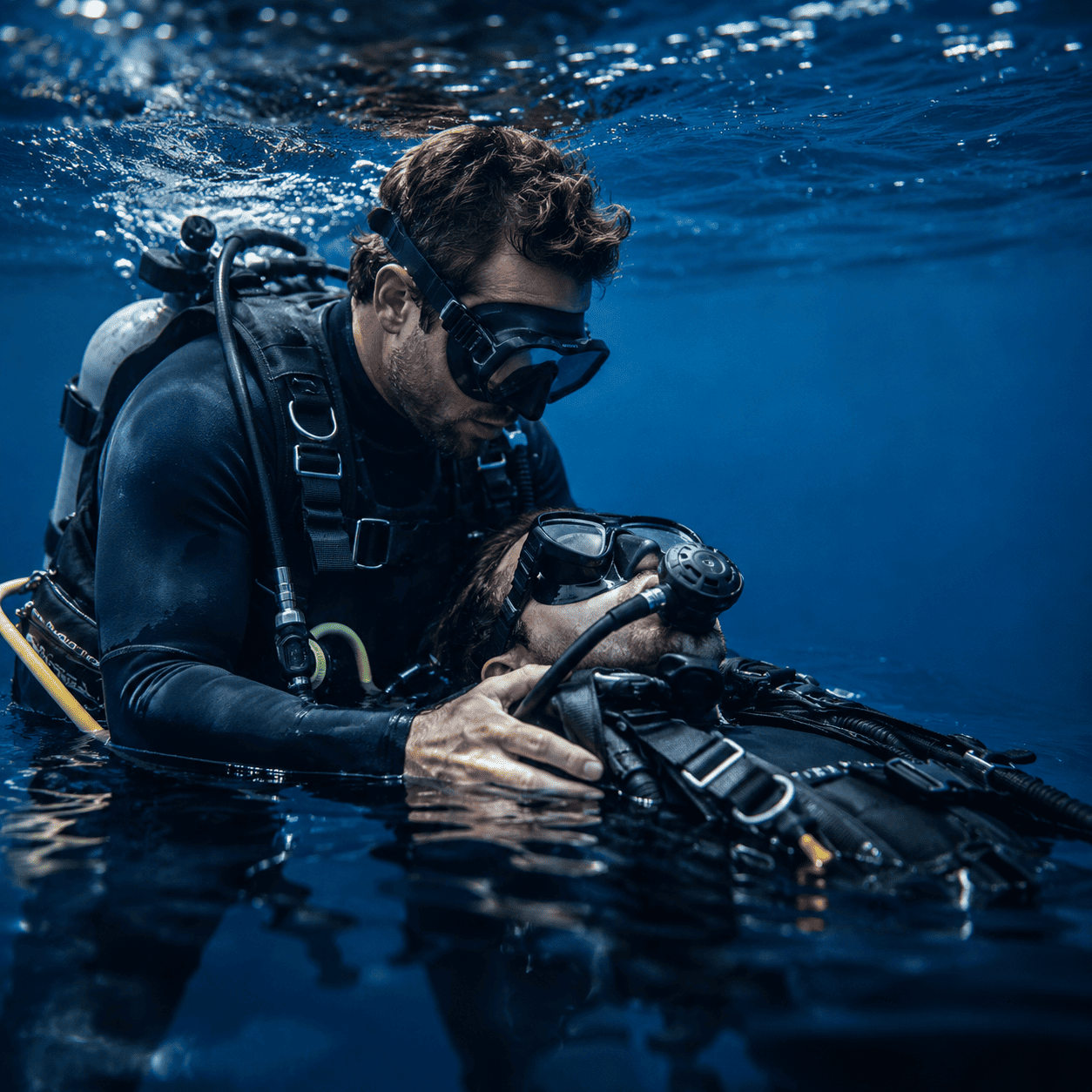
Two of the most important skills in scuba diving are slow ascents and buoyancy control — the foundation of every safe dive.
The Science Behind Slow Ascents
As you descend, increased pressure causes nitrogen to dissolve into your tissues. Rise too fast, and nitrogen can form bubbles — decompression sickness. Always make a safety stop at 5 meters for 3 minutes.
Buoyancy: The Skill That Changes Everything
Good buoyancy means you can hover motionless, glide over coral without touching it, and use less air.
Tips
- Breathe for control: Small inhales rise, small exhales sink.
- Weight check: Float at eye level with empty BCD and normal breath.
- Trim: Stay horizontal to reduce drag.
Our Advanced Open Water course includes dedicated buoyancy training.
Catatan menyelam
Gunakan ini sebagai persiapan praktis, lalu konfirmasi tanggal kursus, kondisi laut, dan ukuran peralatan ke tim Whale Dive Centre.